Mental Oppression, Identity Collapse and the Dark Night of the Soul: How to Reclaim Your Power
Oct 03, 2026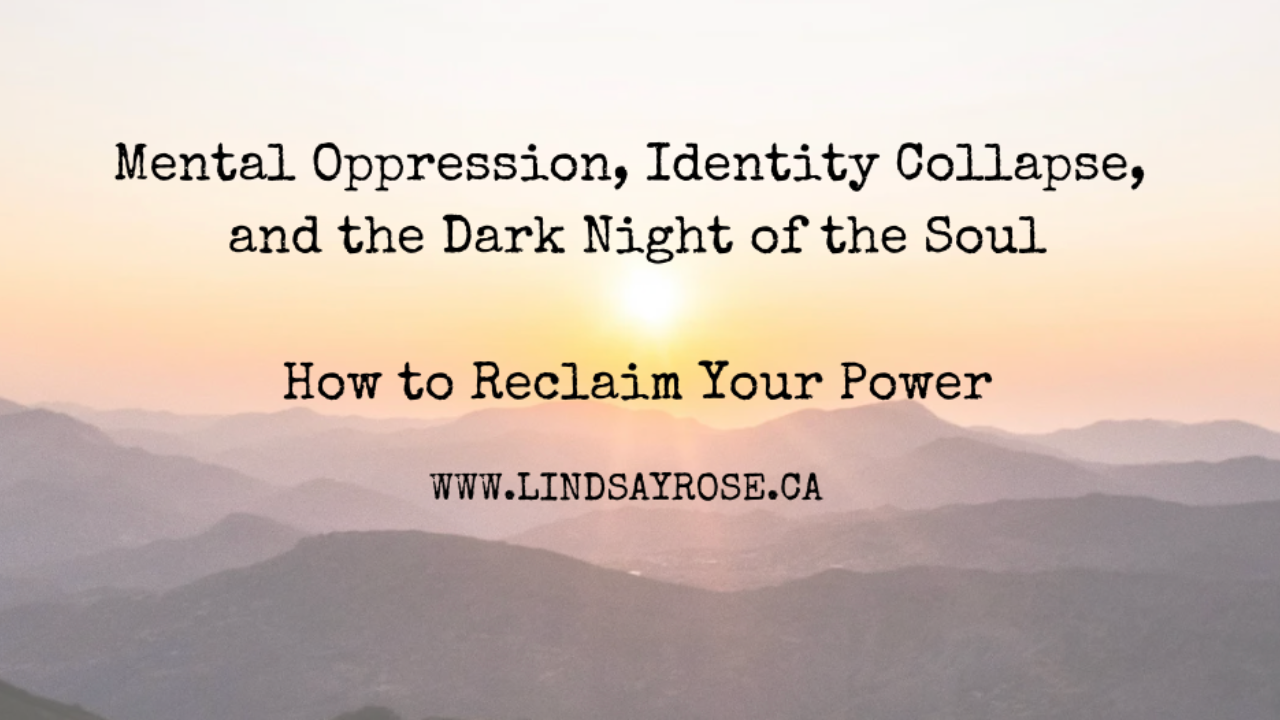
There are seasons in life when it feels as though something inside of you has gone quiet, while something else has become unbearably loud. You may begin waking up in the middle of the night with your mind racing, or wake up one morning and realize that the person you used to be no longer feels familiar. The things that once brought you joy seem distant. Your confidence may have disappeared. You may begin questioning your relationships, your purpose, your beliefs, your choices, and even the way you see yourself. You might find yourself experiencing unexpected outbursts of anger, feeling emotionally numb, or wondering why you suddenly don't seem to care about the things you once cared about so deeply. Sometimes, it can even feel like you are dead inside.
You may not want to do anything. You may not have the emotional capacity to care about what is happening around you. All you want to do is sleep, yet even after getting what should be seven to nine hours of sleep, you wake up feeling exhausted. This is a different kind of exhaustion. It is the exhaustion that comes from carrying too much internally for too long. Your body may be resting, but your mind, emotions, and nervous system may still feel as though they are running a marathon.
From a spiritual perspective, I have come to understand these experiences as moments when the soul is asking us to look beneath the identity we have constructed and recognize what has been living underneath it all along. Sometimes, the life we have built becomes so disconnected from who we truly are that something inside of us begins demanding change. We may not consciously understand what is happening, but we know that something has shifted.
What many people describe as mental oppression can feel like being trapped inside your own mind, as though invisible walls have been built around your thoughts, emotions, confidence, and sense of possibility. It can be frightening because the oppression is not always something you can point to. There may be no physical chains, yet you feel bound and stuck. There may be no person standing in front of you telling you that you are powerless, yet somewhere deep inside, you believe you are.
In this blog, I want to explore mental oppression from a spiritual perspective: how it can begin, the signs that you may be experiencing it, what can happen internally when your identity begins to collapse, why the dark night of the soul can feel so painful, how you can begin reclaiming your personal power, and what may emerge on the other side of this profound inner transformation.
What Is Mental Oppression?
When I speak about mental oppression from a spiritual perspective, I am not suggesting that every difficult psychological experience is caused by a spiritual force or that suffering should automatically be interpreted as a supernatural event. The human mind is incredibly complex, and experiences such as anxiety, depression, trauma, burnout, grief, chronic stress, and emotional exhaustion can profoundly affect the way we think, feel, and perceive ourselves.
Instead, I am speaking about the inner experience of feeling disconnected from your own authority. Mental oppression can describe the feeling that your mind has become a place where fear speaks louder than wisdom, where old wounds dictate present decisions, and where the voice of your authentic self has become increasingly difficult to hear. It can feel as though your thoughts are working against you. You may know logically that you are capable, worthy, and deserving of peace, yet emotionally you may feel trapped in the opposite belief.
From a spiritual perspective, this disconnect can be understood as a separation from your authentic self. You begin living according to fear, conditioning, expectations, and old emotional patterns rather than according to what feels true within you. You may find yourself constantly adapting to the needs and expectations of others while slowly losing touch with your own.
The difficult part is that this process often happens so gradually that you don't notice it happening. You simply wake up one day and realize that you have spent years becoming someone you thought you needed to be rather than discovering who you actually are.
How Mental Oppression Begins
Mental oppression often begins much earlier than we realize. It may begin with a childhood environment where you were constantly criticized, a relationship where your feelings were dismissed, a workplace where you were made to feel inadequate, a betrayal that shattered your trust, or a series of experiences that taught you that being yourself was somehow unsafe. It can also develop through years of people-pleasing, suppressing your emotions, ignoring your needs, or constantly putting everyone else before yourself.
Sometimes oppression begins when we repeatedly abandon our own truth to keep other people comfortable. Every time we silence ourselves, betray our boundaries, ignore our intuition, or convince ourselves that something is acceptable when our inner being knows it is not, we create another layer between ourselves and our authentic identity.
Eventually, we can become so accustomed to overriding ourselves that we no longer recognize the difference between our own voice and the voices we have absorbed from other people. We may think we are making choices freely when, underneath the surface, those choices are being influenced by fear, guilt, conditioning, or the need to be accepted.
This is one of the most difficult aspects of mental oppression: it can become internalized. The person who once criticized you may no longer be present, but their words can continue living inside your head. The relationship that made you question yourself and your own worth may have ended, but the doubt can remain. The environment that taught you to shrink may be long behind you, yet you may still unconsciously make yourself smaller.
The external source disappears, but the internal pattern remains.
The Hidden Voice of Internalized Oppression
The most powerful forms of mental oppression do not always announce themselves. They can sound like your own thoughts.
You may hear an inner voice telling you that you are not good enough, that nobody will choose you, that you will never succeed, that you are too much, that you are not enough, or that you have to keep everyone happy. You may believe that if you speak your truth, you will lose people, or that you cannot start over because you have already invested too much of your life in the path you are on.
Because these thoughts live inside your own mind, you may assume they are facts. But a thought is not automatically a truth simply because it has been repeated for years. Sometimes what we call our personality is actually a collection of adaptations we developed to survive circumstances we were never meant to remain in.
The people-pleaser may have once learned that keeping everyone happy was the safest way to avoid conflict. The perfectionist may have learned that mistakes resulted in criticism. The person who never asks for help may have learned that vulnerability was dangerous. The person who constantly seeks reassurance may have learned that their own judgment could not be trusted. These patterns may have protected you once, but what protects you in one chapter can imprison you in another.
This is why healing often requires looking at the beliefs beneath the behaviour. You may not simply need to change what you are doing. You may need to understand why you have been doing it in the first place.
Signs of Mental Oppression
One of the first signs of mental oppression is a persistent sense of disconnection from yourself. You may look in the mirror and recognize your face but not recognize the person looking back at you. You continue doing what you have always done, but there is a strange emptiness underneath it. You go to work, answer messages, take care of responsibilities, interact with people, and move through your daily routine, yet something within you keeps whispering, “This isn't me anymore.”
It can feel as though your external life is continuing while your internal life is undergoing a complete renovation. You may become increasingly withdrawn or emotionally exhausted. Things that once excited you may no longer have the same effect. You may struggle to feel enthusiasm about the future, even though you cannot necessarily explain why.
Another sign can be an increasing dependence on external validation. When you have lost connection with your own inner authority, you begin searching outside yourself for permission to exist. You need someone else to tell you that you are beautiful, talented, worthy, intelligent, lovable, or capable before you can believe it. You may become highly sensitive to criticism and approval because other people's reactions begin determining how you feel about yourself.
The more your worth depends on external validation, the further you can feel from your own centre. You may begin asking everyone else what they think before you even ask yourself what you think.
Overthinking, Self-Doubt, and Mental Exhaustion
Mental oppression can also show up through relentless overthinking. Simple decisions become complicated because every choice carries a thousand imagined consequences. You replay conversations, analyze people's expressions, wonder what someone meant by a particular word, and question whether you are being unreasonable. You may wonder whether you are too sensitive or whether you imagined an entire situation.
This constant internal debate can become exhausting because you are no longer simply living; you are continually monitoring yourself. The mind becomes a courtroom, and you are simultaneously the defendant, the prosecutor, the witness, and the judge. When this happens, even moments of rest may not feel restful. Your body may be sitting still while your mind is running through every possible scenario.
You may begin to crave silence but become uncomfortable when you finally receive it. You may find yourself sleeping more because sleep is the only time you don't have to consciously engage with everything you are feeling. You may feel emotionally drained before the day has even begun.
From a spiritual perspective, this can be an invitation to become conscious of the beliefs underneath the noise. What are you afraid will happen if you stop controlling everything? What are you afraid people will think if you stop pleasing them? What are you afraid you will discover if you stop running?
Sometimes the greatest fear is not failure. Sometimes it is discovering that the life you have been living no longer belongs to you.
When Your Old Identity Begins to Collapse
This is where the experience can become deeply transformative. You may begin experiencing what I call an identity collapse. Identity collapse can sound frightening, but it does not necessarily mean that you are losing yourself. Sometimes it means that an outdated version of yourself can no longer survive.
The identity that was built around pleasing everyone begins to crack. The identity built around being the strong one begins to crack. The identity built around being needed, successful, desirable, perfect, agreeable, independent, or constantly productive begins to crack. At first, this can feel like failure. Later, you may realize that what was collapsing was not your essence. It was the structure you built around your essence.
Imagine living for years inside a house that you constructed from other people's expectations. One room was built from your parents' beliefs. Another was built from cultural expectations. Another was built from relationships. Another was built from fear. Another was built from past rejection. Eventually, you may realize that you have spent your entire life decorating a house without ever asking whether it was actually yours.
The identity collapse is the moment you begin taking that house apart. It can be messy, painful, terrifying, and disorienting, but it creates the possibility of building something that truly belongs to you.
Why Identity Collapse Can Feel Like Losing Yourself
During an identity collapse, people often become frightened because they cannot immediately identify who they are anymore. You may no longer want what you once wanted. You may lose interest in certain social environments, question relationships that previously felt permanent, change your career direction, or discover that your values have evolved.
Your spiritual beliefs may deepen or change completely. You may suddenly realize that many of your previous decisions were based on fear rather than desire. You may look back at your life and wonder how you got so far away from yourself.
This can create an uncomfortable period of uncertainty because you are no longer who you were, but you have not yet fully discovered who you are becoming.
Spiritually, this is a threshold. You are standing between identities, and thresholds are rarely comfortable. There is often a period where the old version of you has lost its grip, but the new version has not yet fully emerged. This can feel like emptiness, confusion, grief, or even a loss of purpose.
But sometimes the emptiness is simply space.
The Dark Night of the Soul and Spiritual Awakening
This is where the experience commonly known as the dark night of the soul enters the conversation. Spiritually, the dark night of the soul is often described as a profound period of inner darkness, questioning, surrender, and transformation. It is not simply having a bad week or going through a difficult month. It is the feeling that the old map no longer works and the new map has not yet appeared and this process might take years.
What once gave you certainty may no longer provide answers. Your beliefs may change. Relationships may change. Priorities may change. Your understanding of yourself may change. You may feel as though you are wandering through an internal wilderness alone.
The darkness can be especially frightening because we are conditioned to believe that we should always be moving toward something. We want the lesson immediately. We want to know why it happened. We want to know what comes next. We want confirmation that everything will be okay. But some transformations cannot be rushed.
There are periods when life asks us to sit in uncertainty long enough to discover that we are capable of surviving without having every answer.
What Happens Internally During a Dark Night of the Soul?
During a dark night of the soul, the internal experience can be intense. Old memories may surface. Unresolved emotions may become impossible to ignore. Patterns that once seemed normal may suddenly become obvious. You may begin recognizing how often you have betrayed your own needs or how much of your identity was based on being accepted.
You may finally see the difference between love and attachment, between peace and avoidance, and between intuition and fear. Things that once seemed normal may suddenly feel completely different. A relationship you once fought desperately to preserve may no longer feel aligned. A career you once considered your identity may suddenly feel empty. A lifestyle you once pursued may no longer satisfy you.
From a spiritual perspective, this can feel like the soul bringing unconscious material into consciousness. It is as though the inner world is saying, “You cannot continue carrying this in the same way.”
That does not mean every painful thought or emotion is a spiritual message. Sometimes the mind and nervous system are responding to stress, trauma, grief, depression, anxiety, or other mental-health concerns that deserve appropriate care. Spirituality can provide meaning, but it should never become a reason to ignore your mental or emotional wellbeing.
Why the Dark Night of the Soul Feels So Lonely
One of the most painful parts of spiritual transformation is feeling as though nobody understands what you are experiencing. You may try to explain your internal changes to people around you, but they may only see that you are behaving differently. They may tell you that you are overthinking, that you need to go back to the way you were, or that you are making things more complicated than they need to be.
They may not understand why certain things no longer feel acceptable to you, and this can create a profound sense of loneliness. You may find yourself pulling away from people because conversations that once felt normal suddenly feel shallow or exhausting.
But solitude and loneliness are not the same. Loneliness says, “I am disconnected from everyone.” Solitude can say, “I am finally creating enough silence to hear myself.” Learning the difference can become an important part of healing.
Sometimes you need to step away from the noise of other people's expectations long enough to hear your own voice again.
How to Take Your Power Back
Taking your power back does not mean controlling other people. It does not mean becoming cold, aggressive, or unreachable, and it does not mean proving that you are stronger than everyone who hurt you. True personal power is much quieter. It is the ability to return to yourself.
It is learning to recognize what you feel and what you need. It is understanding that you are allowed to have boundaries and change your mind. It is accepting that you do not need everyone to understand your choices. It is learning that you can love people without abandoning yourself and that you can walk away from what continually diminishes you.
Reclaiming your power begins when you stop waiting for someone else to give you permission to become yourself. No one else can ultimately tell you who you are. They may have opinions, expectations, and judgments, but your identity does not have to be built around them.
Reclaiming Your Power Through Awareness
The first step in reclaiming your power is awareness. You cannot change what you refuse to see. Begin noticing the thoughts that repeatedly tell you that you are powerless. Notice when you automatically apologize, when you say yes while everything inside you is saying no, when you feel responsible for another person's emotions, and when you become smaller in certain environments.
Notice who you become around different people. Notice which relationships leave you feeling expanded and which leave you feeling depleted. Notice where you feel safe enough to be yourself and where you feel as though you are constantly performing.
There is tremendous information in these patterns. You do not have to judge yourself for discovering them. Awareness is not about blaming yourself. Awareness is about becoming conscious, and consciousness gives you choices.
Once you can see a pattern, you no longer have to automatically obey it.
Reclaiming Your Power Through Boundaries
Boundaries are another form of spiritual reclamation. A boundary is not a punishment. It is a declaration of where you end and another person begins. You do not need to explain every boundary for it to be legitimate, and you do not need to convince someone that your boundary is reasonable before you are allowed to have it.
You also do not have to become cruel in order to become clear. Sometimes the most powerful sentence you can speak is simply, “That does not work for me.”
The first time you establish a boundary, you may feel guilty. That does not necessarily mean the boundary is wrong. Sometimes guilt is simply the emotional residue of an old identity that was trained to keep everyone else comfortable. If you have spent years putting yourself last, choosing yourself can initially feel selfish even when it is healthy.
Over time, however, boundaries become less about keeping people out and more about keeping yourself connected to who you are.
Rebuilding Self-Trust After Mental Oppression
One of the deepest forms of healing is learning to trust yourself again. Self-trust does not appear overnight. It is built through small promises kept. You say you will rest, and you rest. You say you will stop engaging in a conversation that repeatedly harms you, and you stop. You say you will pursue something meaningful, and you take one small step. You say you'll get up at a certain time or workout, and you do. You tell yourself that your feelings matter, and then you listen to them.
Each time you honour yourself, you send an internal message: I am safe with me. I will not abandon me.
This is where personal power begins becoming something you experience rather than something you talk about. You stop needing constant reassurance because you begin developing an internal sense of trust. You may still ask others for advice, but you no longer hand your decision-making authority entirely to them.
There is a quiet confidence that comes from knowing you will stand beside yourself regardless of what happens.
The Role of Intuition in Spiritual Healing
As you reconnect with yourself, your intuition may begin to feel clearer. Intuition does not always arrive as a dramatic spiritual message. Sometimes it is a quiet knowing. Sometimes it is the realization that something no longer feels aligned. Sometimes it is the courage to pause before making a decision. Sometimes it is recognizing that you have been trying to force a door that was never meant to open.
Spirituality becomes less about searching for signs everywhere and more about becoming present enough to recognize what is already happening within you. The quieter you become internally, the easier it can be to distinguish your deeper knowing from the noise of fear, conditioning, and other people's expectations.
Intuition is not about surrendering your discernment. It is about becoming deeply present with yourself while still using wisdom, evidence, reflection, and practical judgment. The spiritual path is not about turning off your mind. It is about learning how to bring your mind and inner knowing into greater harmony.
What Happens After the Dark Night of the Soul?
After the dark night of the soul, people sometimes expect to become an entirely different person. In reality, the deepest transformation may feel less like becoming someone new and more like becoming more fully who you were before fear taught you to shrink.
You may laugh differently. You may make different choices. You may have fewer relationships but deeper ones. You may become less interested in proving yourself. You may no longer feel compelled to explain every decision. You may become comfortable with disappointing people who benefited from your lack of boundaries. You may dress differently.
The transformation is often subtle at first. You simply notice that something inside you has changed. The things that once controlled you no longer have quite the same power. You may still have difficult days, but you are no longer completely consumed by them.
You begin realizing that healing was never about becoming someone who never struggles. It was about becoming someone who knows how to return to themselves when they do.
Returning to Joy After Your Old Life Falls Apart
There is a moment that can come after the darkness when something inside of you begins to shift. It may not happen dramatically, and there may not be one particular morning when you wake up with all the answers. Instead, joy begins returning in small, almost imperceptible ways. You laugh and realize that you have not laughed like that in a long time. A song moves through you differently. You wake up with an idea that excites you. You find yourself imagining a future again. You notice the sunlight coming through the window, feel drawn toward nature, or suddenly want to create something that has been sitting inside of you for years.
You may begin wanting to travel, learn, love, write, paint, build, explore, teach, or simply experience life again. This is the return of joy, and after a prolonged period of inner darkness, it can feel surprisingly unfamiliar.
When you have spent a long time surviving, joy can initially feel unsafe. You may have become so accustomed to anticipating disappointment that happiness itself makes you nervous. The moment you begin feeling good, part of you may wonder when something is going to go wrong. You might even feel guilty for enjoying yourself while other parts of your old life are still falling apart.
But joy does not require you to have everything figured out. You do not have to wait until every problem has been solved, every relationship has been understood, or every question about your future has been answered before you allow yourself to experience happiness. Sometimes joy is the first evidence that your spirit is beginning to breathe again.
Becoming Crystal Clear About What You Want
One of the most beautiful things that can happen after an identity collapse is clarity. It is not necessarily the kind of clarity where you suddenly have every detail of your future mapped out. It is a deeper clarity about what you no longer want to participate in and what no longer feels authentic to you.
You become clear about what drains you, what feels false, which relationships require you to abandon yourself, which environments prevent you from growing, and which dreams you have repeatedly postponed because you were afraid of what other people might think.
Eventually, another question begins to emerge: What do I actually want?
That question can change everything.
When you have spent years responding to everyone else's expectations, discovering what you want can feel like learning a new language. You may be so accustomed to asking what everyone else needs that you have forgotten to ask yourself. At first, the answer may be difficult to find. You may sit quietly and realize that you genuinely do not know what makes you happy anymore. That is not a failure. It is simply the beginning of reconnecting with yourself.
As you begin listening without judgment, your desires gradually become clearer. You start recognizing the experiences that make you feel alive, the work that gives you meaning, the relationships that make you feel safe, the places that bring you peace, and the creative pursuits that make you lose track of time.
What becomes especially powerful is that these desires may not be the things that impress other people. You may discover that you do not actually want the career everyone told you would make you successful. You may not want the relationship that looks perfect from the outside. You may not want a life that is constantly busy, productive, or impressive.
You may discover that what you really want is freedom, authenticity, creativity, meaningful connection, peace, adventure, or a quieter way of living. There is no universal definition of an awakened life. Your job is not to create the life that looks spiritually evolved to someone else. Your job is to become honest enough to discover what feels true for you.
When You Stop Rebuilding the Life You Just Outgrew
There is an important distinction between rebuilding your life and recreating your old life with different scenery. After an identity collapse, there can be a temptation to rush into something new simply because you cannot tolerate the emptiness of transition. You may immediately want another relationship, another career, another group of friends, another home, or another identity. Sometimes change is necessary, but sometimes we use change as a way to avoid sitting with ourselves.
There is wisdom in allowing the old life to be gone for a little while. You do not have to immediately replace everything you have lost. You do not have to know exactly what your next chapter looks like. The empty space can be uncomfortable, but it can also be incredibly sacred.
When you stop desperately trying to recreate a version of yourself, you finally have room to discover who you actually are. Your next chapter can then come from clarity rather than fear.
This is one of the reasons the period after a dark night of the soul can feel so different. Before, you may have been making decisions simply to escape pain. Now, you can begin making decisions because they genuinely align with the person you are becoming.
The Difference Between Escape and Alignment
There is a difference between running away from your old life and moving toward a life that is genuinely aligned with you. Escape says, “I need to get away from this.” Alignment says, “I know where I want to go.” Escape is often fueled by urgency, while alignment can feel surprisingly peaceful.
When you become clear about what you want, you may no longer feel the same frantic need to prove that you have moved on. You simply begin making different choices. You stop explaining yourself to people who have already decided not to understand you. You stop chasing situations that repeatedly make you question your worth. You stop forcing relationships, opportunities, and outcomes that require you to betray yourself.
You begin choosing what feels healthy, meaningful, and authentic. This is where reclaiming your personal power becomes visible. You are no longer simply talking about transformation. You are living it.
What Returning to Joy Actually Looks Like
Returning to joy does not necessarily mean becoming carefree or positive all the time. In fact, it can look much simpler than that. It may mean making breakfast because you genuinely enjoy cooking, taking a walk without needing to turn it into a productivity exercise, dancing in your kitchen, buying flowers for yourself, starting the creative project you kept postponing, or spending an afternoon doing absolutely nothing without feeling guilty.
It can mean saying yes to an adventure because you genuinely want the experience rather than because you want someone else's approval. It can also mean saying no to something because you know it will disturb your peace. Joy becomes less about chasing a particular feeling and more about creating a life where your mind, body, heart, and spirit have room to breathe.
You begin realizing that joy is not something another person gives you. It is something you become available for. When you are constantly living in fear, people-pleasing, overthinking, and survival mode, there may be very little room left for joy. As those patterns begin to loosen, you discover that joy was not necessarily missing. You simply had very little space to experience it.
When You Finally Know What You Want
There is a particular kind of power that comes from becoming clear about what you want. You no longer spend hours debating whether something is right for you. You no longer need ten people to validate every decision. You no longer feel compelled to explain why you are changing direction. You simply know.
Perhaps you realize that you want a different kind of relationship. Perhaps you want to leave a career that no longer reflects who you are. Maybe you want to create something of your own, travel, live closer to nature, have more freedom, build a quieter life, or pursue work that feels meaningful. Maybe your greatest desire is not something dramatic at all. Maybe you simply want to wake up and feel at peace with the person you see in the mirror.
The details will be different for everyone, but what matters is that the decision is coming from within rather than from fear of what other people will think. There is a profound difference between choosing a life and performing a life.
When you have been performing your life, you are constantly asking, “Does this look right?” When you begin choosing your life, the question becomes, “Does this feel true?” That is a completely different way of living.
The New Life May Feel Quieter Than You Expected
One of the surprises after profound transformation is that your new life may not look dramatic. We sometimes imagine that reclaiming ourselves means making enormous changes, cutting everyone off, moving across the world, starting a completely new career, or becoming an entirely different person. Sometimes those things happen, but transformation is often much quieter.
You wake up and realize that you are no longer attracted to chaos. You realize you do not want to argue anymore. You realize that you would rather have peace than be right. You realize that being misunderstood is no longer unbearable. You realize that you would rather have three genuine relationships than thirty superficial ones. You realize that you do not need to constantly achieve something to deserve rest. You realize that your definition of success has changed.
Perhaps your old life was built around proving yourself. Your new life may be built around experiencing yourself. That is a profound shift.
Your Life Begins to Reflect Your Inner Truth
Eventually, the internal transformation begins showing up in your external world. Your choices change, your relationships change, your boundaries change, your priorities change, and sometimes your environment changes as well. But these external changes are no longer being made simply because you are desperate to escape your past. They are expressions of the person you have become.
This is what alignment can feel like. You stop forcing your external life to match an identity that no longer fits. Instead, your external life gradually begins reflecting your internal truth. The work you choose begins to reflect your values. The people you allow close to you reflect the level of respect you have learned to give yourself. The way you spend your time reflects what you actually consider important.
Your home begins to feel like your sanctuary. Your schedule begins to have space in it. Your relationships begin to have honesty in them. Your life becomes less about maintaining an image and more about inhabiting your own existence.
Learning How to Live After Spiritual Awakening
After a profound period of inner transformation, peace can actually feel strange. If your nervous system has become accustomed to chaos, peace can feel empty. If you have spent years chasing approval, unconditional self-acceptance can feel unfamiliar. If you have defined love through struggle, healthy love may initially seem almost too simple.
This is why healing is not only about leaving darkness. It is also about learning how to live in the light without recreating the darkness because it feels familiar. You may need to learn how to receive. You may need to learn how to rest. You may need to learn how to enjoy your life without constantly waiting for something to go wrong. You may need to learn that peace does not mean something is missing.
Sometimes peace means something has finally stopped hurting.
Joy Is Not the Absence of Pain
It is important to understand that returning to joy does not mean you will never feel sadness again. You will still experience disappointment. You will still grieve. You will still have difficult days, and there will still be moments when old fears return. Healing does not make you immune to being human. What changes is your relationship with those experiences.
A difficult day no longer automatically becomes a difficult life. A rejection no longer automatically becomes proof that you are unworthy. A relationship ending no longer means that you have lost yourself. A mistake no longer becomes evidence that you are a failure. You begin to understand that emotions can move through you without becoming your identity.
Joy can exist alongside grief. Hope can exist alongside uncertainty. Peace can exist alongside unanswered questions. Perhaps this is one of the greatest forms of spiritual maturity: realizing that you do not have to eliminate darkness in order to appreciate the light.
Forgiving Yourself for Who You Had to Be
There may also come a point where forgiveness becomes part of the journey, but forgiveness should never be confused with allowing continued harm. You can release the emotional grip of an experience without pretending it never happened. You can forgive someone internally and still keep your distance. You can understand why someone behaved the way they did and still decide that you will not accept that behaviour in your life.
Sometimes forgiveness is not about returning to another person. Sometimes forgiveness is about returning to yourself.
You may eventually look back at your former self and realize that the person you once criticized was doing the best they could with the awareness they had at the time. That realization can bring tremendous compassion. You may understand why you stayed, why you tolerated certain things, why you were afraid, why you needed approval, and why you kept returning to familiar patterns.
Understanding does not mean excusing everything. It means releasing the need to punish yourself forever for being human.
The Spiritual Meaning of Reclaiming Your Identity
The dark night eventually teaches us something that the comfortable seasons of life sometimes cannot: we are more than the identities we lose. We are more than the relationships that end. We are more than the opinions people have of us. We are more than our successes and failures. We are more than our past.
Beneath all the roles, expectations, wounds, and stories is a part of us that remains capable of beginning again. That is the hidden gift of identity collapse. It gives you the opportunity to ask a question you may have avoided for years: If I were no longer trying to become who everyone else needed me to be, who would I choose to become?
Perhaps the answer will not arrive immediately. Perhaps it will emerge through small moments: a morning when you feel peaceful for no particular reason, a decision you make without asking everyone else's opinion, a boundary you establish without guilt, a creative idea that suddenly returns, a relationship that feels safe instead of consuming, or a moment when you realize that you are no longer waiting for someone else to rescue you.
This is what the return of personal power can look like. Not perfection. Not constant happiness. Not a life without fear. It is the gradual realization that fear no longer gets to make every decision.
Mental Oppression, Spirituality, and Mental Health
If you are walking through your own dark night of the soul, it is important to honour both the spiritual and human dimensions of what you are experiencing. Spirituality and mental health do not have to compete. You can find spiritual meaning in your experience while also recognizing that the human mind and nervous system sometimes need professional care and support.
If your exhaustion, emotional numbness, anger, sleep changes, anxiety, depression, or other symptoms become persistent or interfere significantly with your ability to function, it is important not to assume that everything you are experiencing is simply a spiritual awakening. Reaching out to a qualified doctor or mental-health professional is not a failure of spirituality. It is an act of self-respect.
There is wisdom in seeking support, and there is strength in allowing other people to walk beside you. The soul does not ask us to suffer alone.
The Light After the Dark Night of the Soul
Eventually, you may look back at the chapter that once felt like your destruction and realize it was also the chapter in which you began meeting yourself. You may realize that you did not lose yourself. You lost the version of yourself that could no longer carry you forward.
You may realize that the things you once considered weaknesses, your sensitivity, your depth, your ability to feel, your kindness, your empathy, your desire for meaning, were not defects. They were invitations to become conscious.
The person who emerges from this process may not be louder. They may simply be clearer. They may not need to prove their strength because they know it. They may not need to convince everyone because they have stopped negotiating their worth. They may not have every answer, but they have something more valuable: a loving relationship with themselves.
And perhaps that is what the dark night was ultimately trying to teach.
Your power was never completely gone. It was buried beneath fear, conditioning, expectation, grief, survival, trauma, and the identities you had to create in order to make it through. The journey was not necessarily about becoming powerful. It was about remembering that you already had an inner authority that no one else could permanently take from you.
The return begins when you stop asking, “How do I become who I used to be?” and begin asking, “Who am I now?”
Sit with that question.
Let it breathe.
You do not have to answer it all at once. Because sometimes the most profound spiritual transformation begins in the quiet moment when you finally stop searching outside yourself for the person you are becoming, and turn inward to meet the person who has been there all along.
Becoming Devoted to the Life That Feels Like You
After everything falls apart, there comes a point when you stop asking how to get your old life back. You begin asking how to create a life that feels like you. That question is sacred because now you are no longer building from fear. You are building from awareness.
You are no longer choosing based solely on what will keep other people happy. You are choosing based on what allows you to remain connected to yourself. You are no longer asking, “What will make me look successful?” You are asking, “What will make my life feel meaningful?” You are no longer asking, “Who will approve of me?” You are asking, “Who do I actually want beside me?”
You are no longer asking, “How can I become who I used to be?” You are asking, “Who am I becoming now?”
There is an extraordinary freedom in that question. Once you become clear about what you want, you no longer have to chase everything. Clarity becomes a filter. You know what belongs. You know what does not. You know what deserves your energy and what no longer does. You know what feels like love, what feels like fear, what feels like expansion, and what feels like self-abandonment. You begin choosing differently, not because someone told you to, but because you have finally experienced the cost of betraying yourself.
The Return to Yourself
Perhaps the greatest gift on the other side of mental oppression and identity collapse is not becoming a completely new person. It is returning to the parts of yourself that were buried beneath survival: the playful part, the curious part, the creative part, the passionate part, the peaceful part, and the hopeful part. It is reconnecting with the part of you that had dreams before it learned to be afraid of them.
You begin realizing that this person never completely disappeared. They were waiting for you to become quiet enough to hear them and brave enough to choose differently. They were waiting for you to stop asking the outside world who you were supposed to be.
And when you finally return to yourself, joy does not necessarily arrive as fireworks. Sometimes it arrives as a quiet exhale. Sometimes it sounds like laughter. Sometimes it feels like freedom. Sometimes it looks like waking up and realizing that you genuinely love the life you are living.
And sometimes it is simply the beautiful realization that you are finally living a life that feels like yours.
That is the true return, not returning to the person you were, and not returning to the life that broke you, but returning to yourself with greater awareness, deeper boundaries, clearer desires, and the freedom to consciously create what comes next.
Are You Ready to Step Into Your Power?
Join Magnetic OverFlow and start creating the life you were always meant to live.

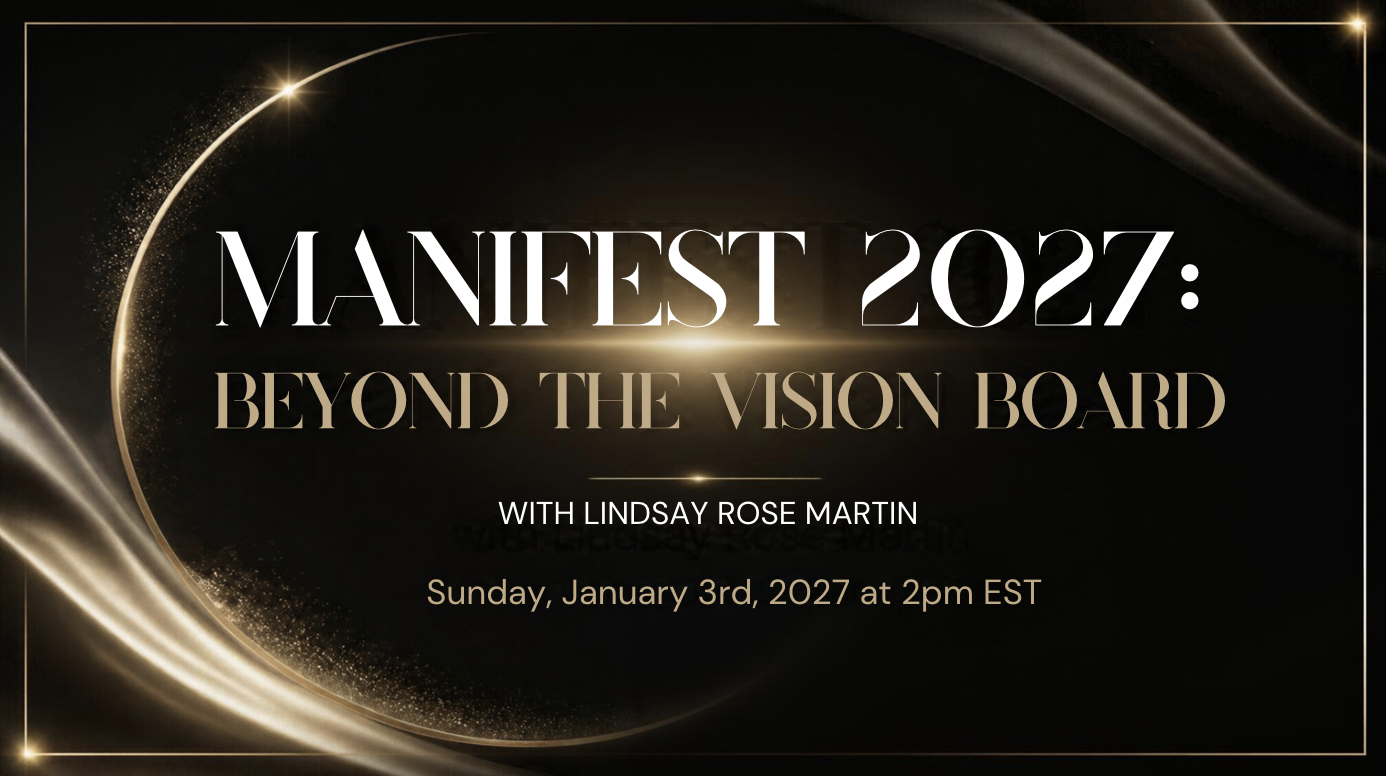
Save Your Seat for Manifest 2027
This live online workshop is not about creating a beautiful vision board or writing down another list of goals. It's about getting crystal clear on what you really want, and actually getting results.
Join Lindsay live on January 3rd! Save your seat today.
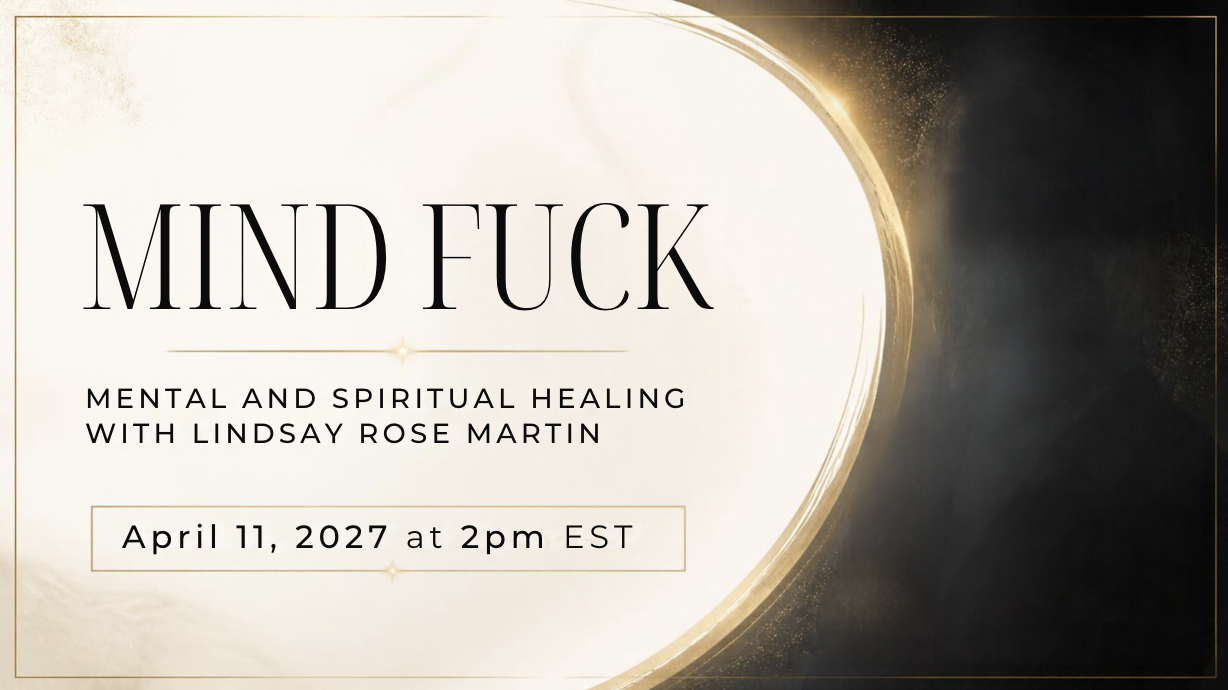
Save Your Seat for Mind Fuck 2027
It’s normal to be healthy, happy, abundant, energized, confident, and successful.
If you’re not, then clearly something is wrong. That isn’t something to stress or even worry about, because it can be healed and transformed using the power of your subconscious mind and once you know what to do and most importantly what not to do, your life becomes yours to create!
Join Lindsay live on April 11th! Save your seat today.